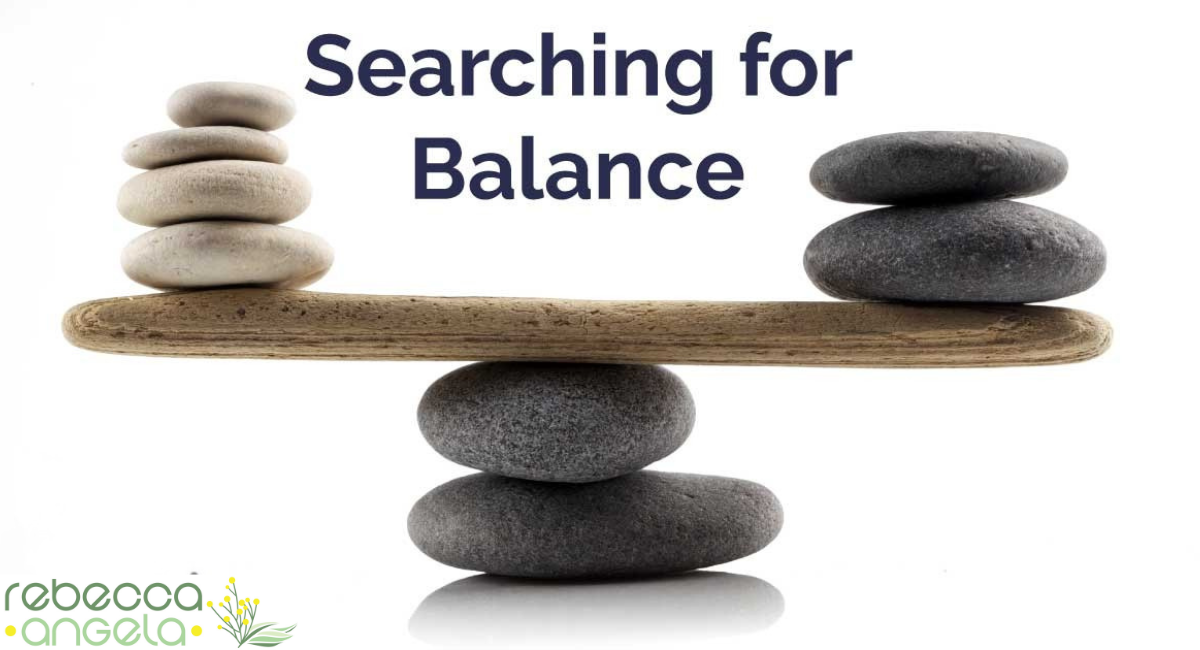
I’ve been trying to find more balance in my life. Starting my own business this year was largely in response to the stress that had developed by trying to be in two places at the same time – home and work. Working from home would bring back the balance in my life, right?
Countering Overwhelm
Well it has helped in many ways. My children are a lot calmer and happier for starters – and that is huge. But starting a business is so overwhelming! There is so much to learn and there are just so many things to do to get things off the ground. There is heaps of advice and excellent business content out there in Internetland but I have found myself dazzled by every shiny idea that pops up. My head has been spinning, not knowing what to do next!
In addition, I have been panicked by the pressure to have my stall and stock ready for the Handmade Market. (I talked about that journey in another recent post.) This left me not only unable to focus on other aspects of my business but almost in a state of frozen indecision.
A little stress might be a good thing but for me sustained stress can turn into depression and when I felt that black dog sneaking back into my life I realised something about my ‘new life’ was not as it should be.
Pursuing Sustainability
I am so grateful for the opportunity to run my own creative business. My husband is wonderfully supportive. I expect and want to work hard at the business. I am excited and challenged by the all the new things I am learning. I look forward to Blue Radish growing steadily with my attention to it. I also realise, however, that the business needs to be sustainable within the context of my life and family.
If the reason I left my employment was to bring balance into my life, then working every hour of the day and night in my business is not achieving that. So I’ve been thinking (and reading) deeply on the issue over the last couple of months.
Put the Big Rocks in First
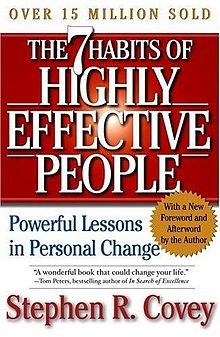
One of the themes that keeps coming up returns me to an analogy by Steven Covey from The 7 Habits of Highly Effective People. The analogy goes, or at least my interpretation of it, that your life is a jar. The jar contains only a certain amount of space and that is the time you have. If you fill the jar with sand (all the little things we do in our day such as checking email, social media, chasing our tails) and then try to put in the pebbles and larger rocks of your important tasks and responsibilities, you will run out of room in the jar. However, if you put the large rocks in first (your highest priorities and most important tasks) then the gravel (the lower priority but less urgent or important tasks) and finally the sand, you will fit in all the important things. There might not be room for all of the sand but a lot of it will filter down into the spaces between the rocks and pebbles. There is a YouTube video demonstration of this on The Productivity System channel. It might not be a perfect analogy but it makes a lot of sense to me.
Find the Sweet Spot
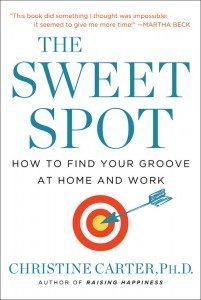
In another book I am reading, The Sweet Spot by Christine Carter, the author describes how she has worked out her top five important priorities and spends most of her time on them and, for the most part, she says, “No!” to any activity or task that doesn’t fall under those priorities. Her first priority, by the way, is to “Maintain my own health and happiness.” I am certainly learning some lessons from this woman!
Anyway, these five priorities are Christine Carter’s big rocks. She puts them in her jar first. She aims to spend 95% of her time on only those priorities. That is a lofty goal but look at what her priorities are: Maintain my own health and happiness, Nurture others (she is a wife and mother of four), Write this book, Work toward being a truly great speaker, and Maintain my website, newsletters, and online classes. They are broad enough to encompass everything that is important to her but specific enough that she can determine if an activity fits within one of the priorities or not. Perhaps 95% is achievable in that light.
Follow the 80/20 Rule
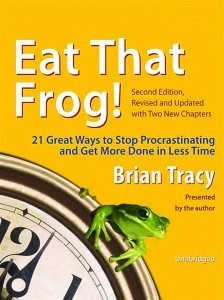
Another helpful idea comes from the book Eat That Frog by Brian Tracy. The title is based on a Mark Twain quote which says, “Eat a live frog first thing in the morning and nothing worse will happen to you the rest of the day.” Well, quite! But the point in this context is, of course, that you should do the most important things first.
In the book and in a blog post here Tracy refers to the 80/20 Rule or Pareto Principle which proposes that “20% of your activities will account for 80% of your results”. The big rocks are the 20% of course. So perhaps I could aim to spend 80% (rather than Carter’s 95%) of my time on the 20% – my highest priorities or big rocks.
Set Goals
It comes down to working out what the big rocks are though. My head is swimming with all the activities and tasks I feel like I should be doing to get the business off the ground. If one of my priorities (and it is) is to establish Blue Radish as a business and ‘going concern’, that broad priority encompasses an enormous number of responsibilities and tasks – not least of which is learning how to do all this stuff! So, although I like the simplicity of Christine Carter’s priorities, it doesn’t seem quite that simple to me.
I need to sift through all the competing activities and work out what are the 20% of activities that will make the most impact on my business and life. It is a daunting task.
It has made me realise though what goal setting is really all about. Goal setting, of course, is priority setting. It is not so much about ‘getting ahead’ (you know, all the literature that says if you have written goals you will earn more, have more, succeed more) as it is about clearing the mental clutter from your head and the task cutter from your day, knowing what it is you need to focus on so that you can be more efficient, effective, focussed and less stressed!
I have written goals – personal and business – so now I am trying to get into the discipline of planning my day by referring to those goals to determine my priorities. And then discipline myself to work on the 20%.
This is certainly a work in progress. As is the work of finding balance in my life. I’m sure you’ll hear more about it. In the meantime, however, do you have any strategies you use to keep the balance in your life? Are there books you would recommend on the subject? Please share them in the comments below. I look forward to hearing them!